UK
Making Tax Digital for VAT
Digital VAT records and digital links between software, with returns sent through compatible software.
Keep the chain from source to return.
VAT reconciliation, with a reason
When your books and the prefilled record disagree, start with the difference. Follow it to the source. Keep the explanation beside the numbers.
01 / The comparison desk
Choose a period. Inspect a difference. Record what explains it.
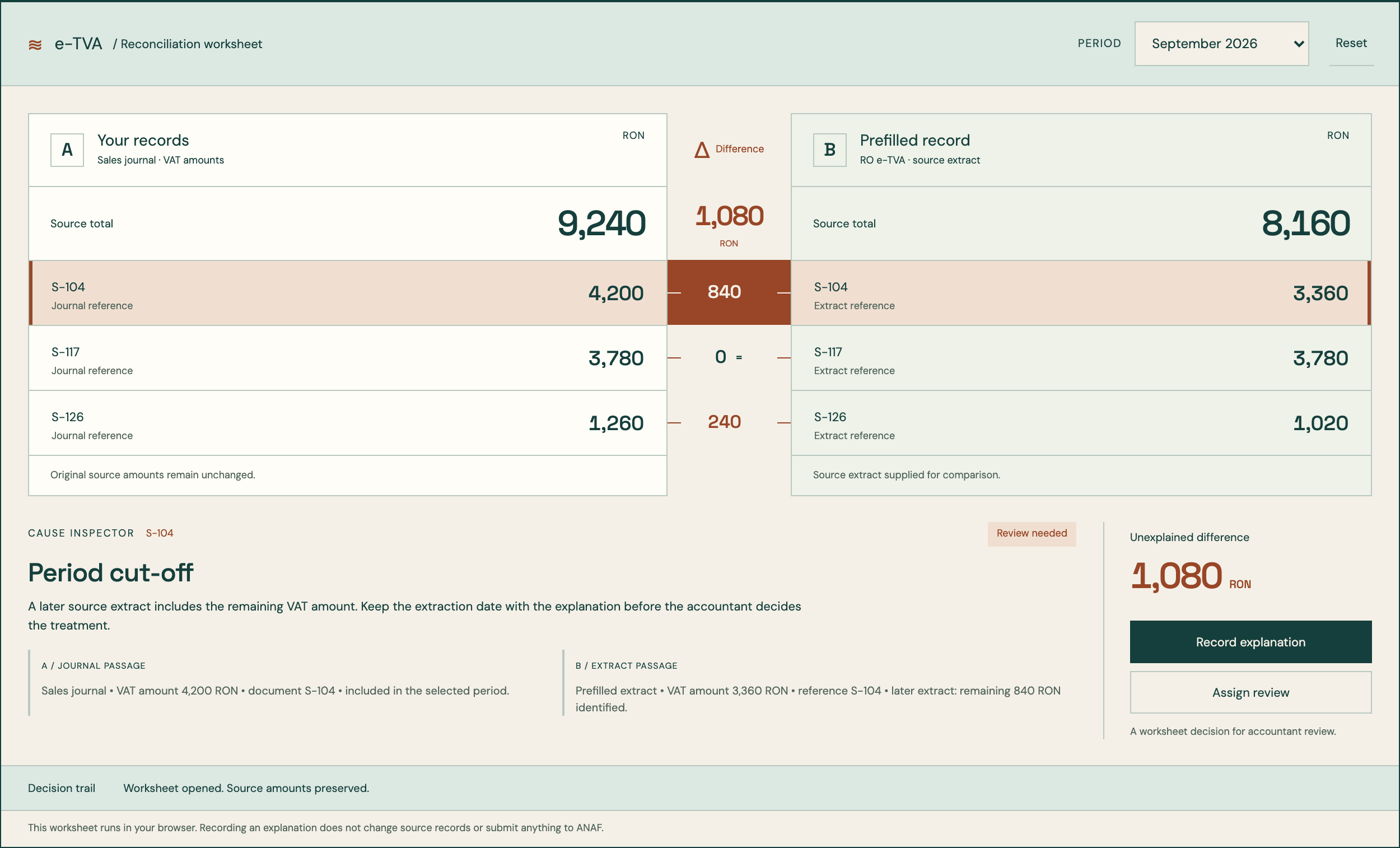
Sales journal · VAT amounts
Original source amounts remain unchanged.
Cause inspector S-104
Review neededA later source extract includes the remaining VAT amount. Keep the extraction date with the explanation before the accountant decides the treatment.
Sales journal • VAT amount 4,200 RON • document S-104 • included in the selected period.
Prefilled extract • VAT amount 3,360 RON • reference S-104 • later extract: remaining 840 RON identified.
This worksheet runs in your browser. Recording an explanation does not change source records or submit anything to ANAF.
02 / From a number to a reason
A reconciliation is useful when someone else can follow it. Build a review process around the source, the period and the person responsible.
Agree which periods, records and extracts belong together before interpreting the difference.
Bring the journal reference and prefilled passage into the same view. Check cut-off dates and record mapping.
Keep the explanation and the outstanding work together, ready for the accountant’s judgement.
A closer look
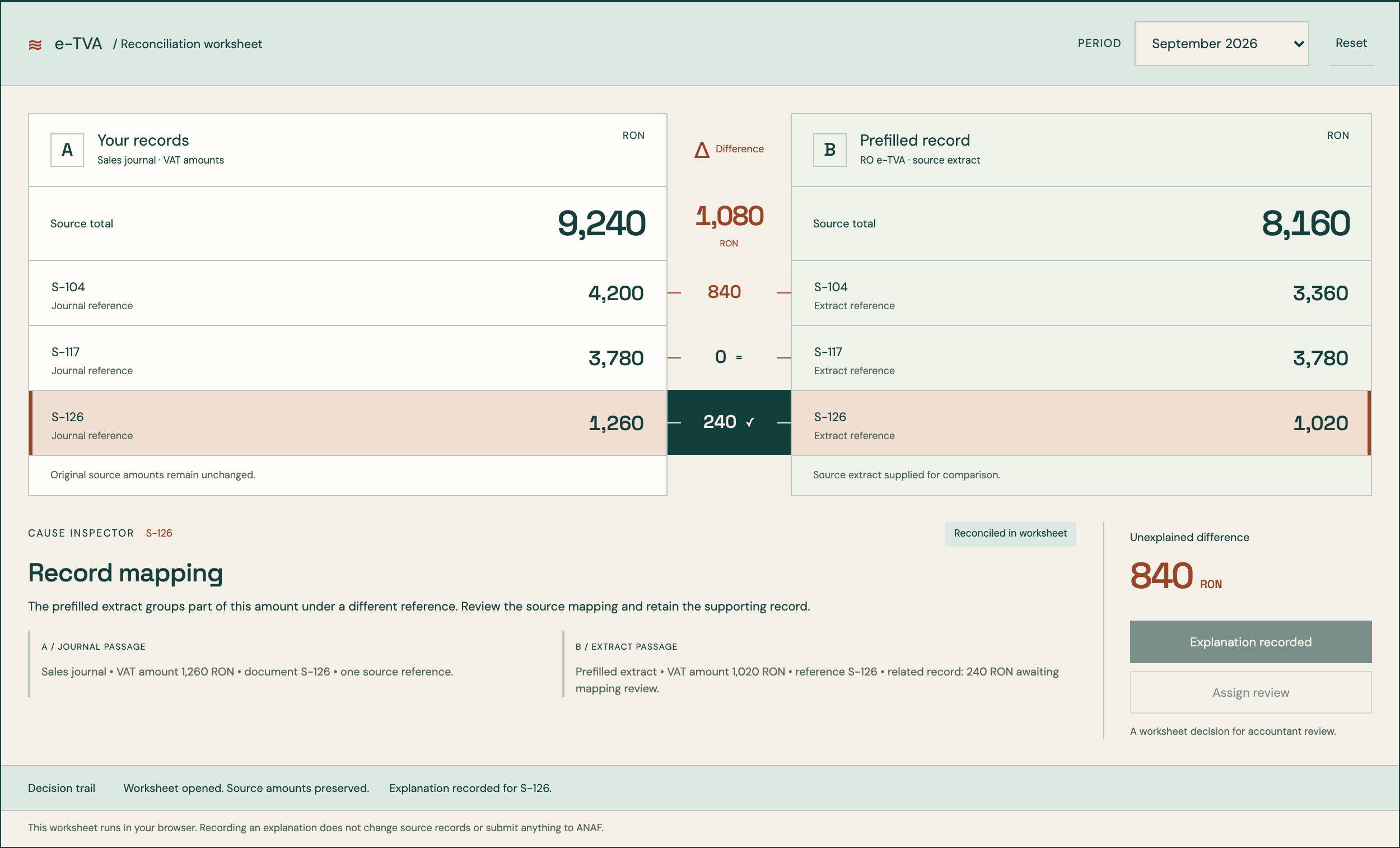
The source values stay visible even after an explanation is recorded. The review balance tells you what still needs attention.
Work through a difference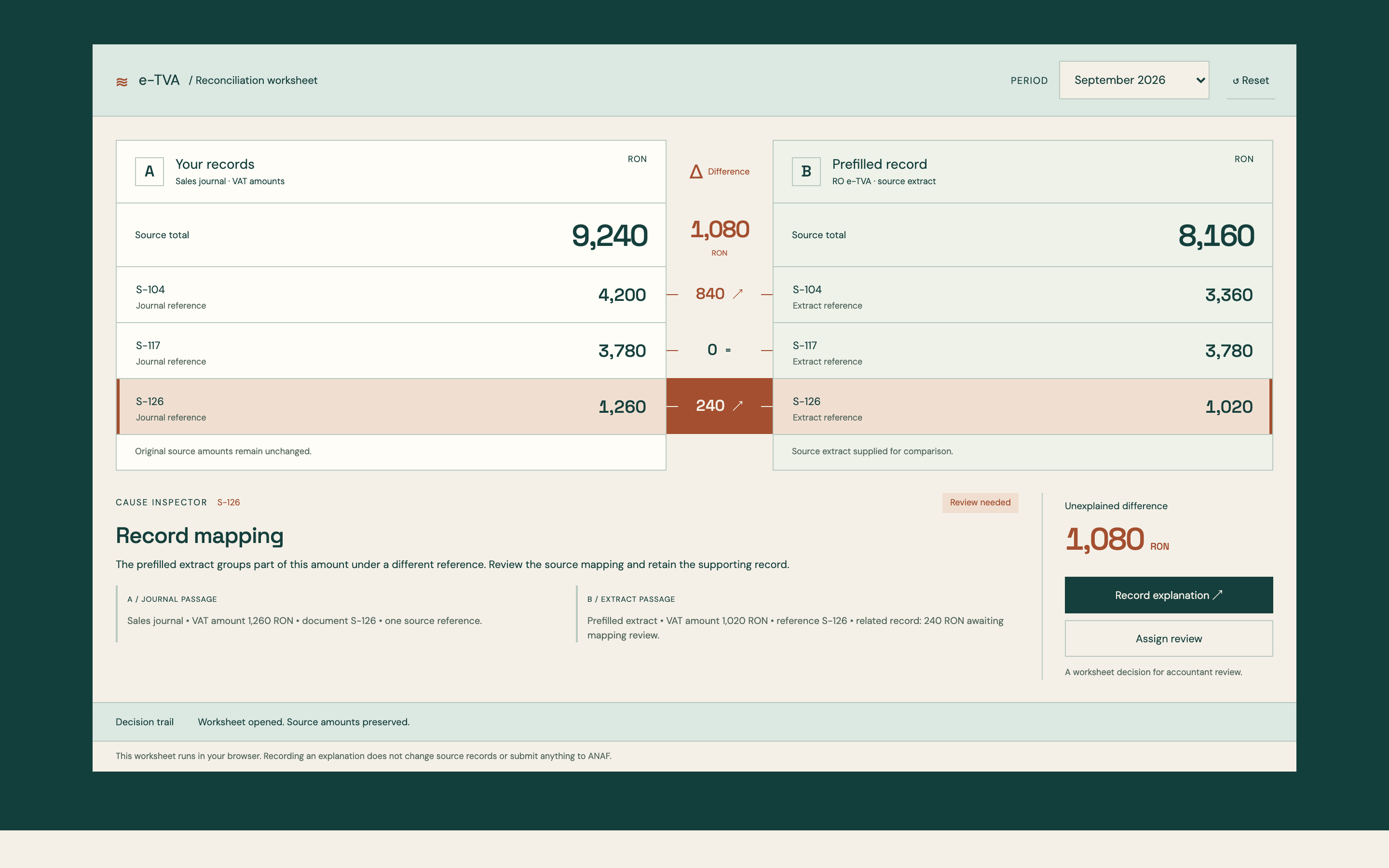
The Romanian context
RO e-TVA provides a prefilled VAT record. Our proposed workflow brings that record alongside your own evidence for reconciliation and accountant review. The accountant determines the treatment and any next formal step.
Sources checked 6 October 2026. Implementation scope is confirmed against the rules applicable to your organisation.03 / A wider perspective
The UK, Spain and Poland organise digital VAT differently. These approaches inform how we think about traceability; each has its own legal and technical requirements. Our e-TVA scope starts in Romania.
Digital VAT records and digital links between software, with returns sent through compatible software.
Keep the chain from source to return.
SII keeps VAT record books through invoice-record information supplied to AEAT. It does not require sending the actual invoices.
Make record-level feedback traceable.
JPK_V7 combines VAT records and declaration data. KSeF is the separate system for issuing and receiving structured invoices.
Connect the detail to its summary.
Official sources checked 6 October 2026. Country comparisons describe programmes, not software availability in those countries.
04 / Your reconciliation brief
e-TVA is being developed. Tell us how your team prepares VAT records, where the prefilled data comes from and who reviews the differences. We agree the scope, integrations and delivery before access.
Your accounting sourcesERP, journals and available exports
Your comparison processPeriods, evidence and review responsibilities
A closer look